
Tag Archives: Rashid Sumaila
New Paper in Nature Sustainability: Towards a sustainable and equitable blue economy
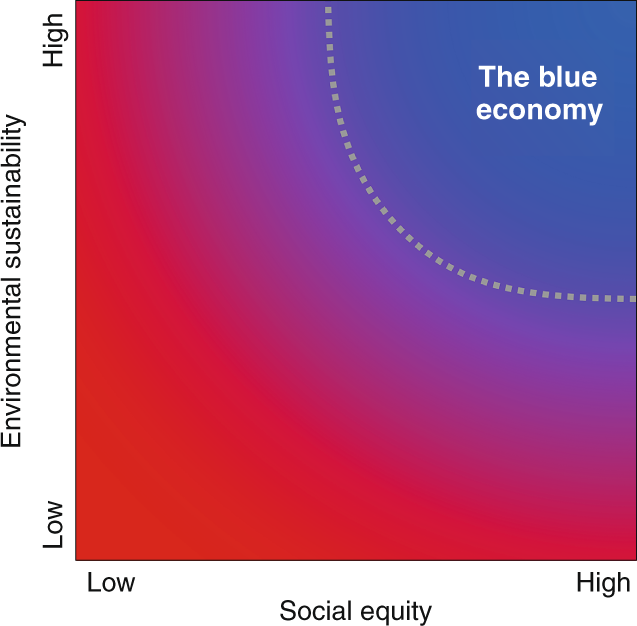
A global group of collaborators and I just published a new paper in Nature Sustainability titled “Towards a sustainable and equitable blue economy“.
In this paper, we argue that “The global rush to develop the ‘blue economy’ risks harming both the marine environment and human wellbeing. Bold policies and actions are urgently needed. We identify five priorities to chart a course towards an environmentally sustainable and socially equitable blue economy.”
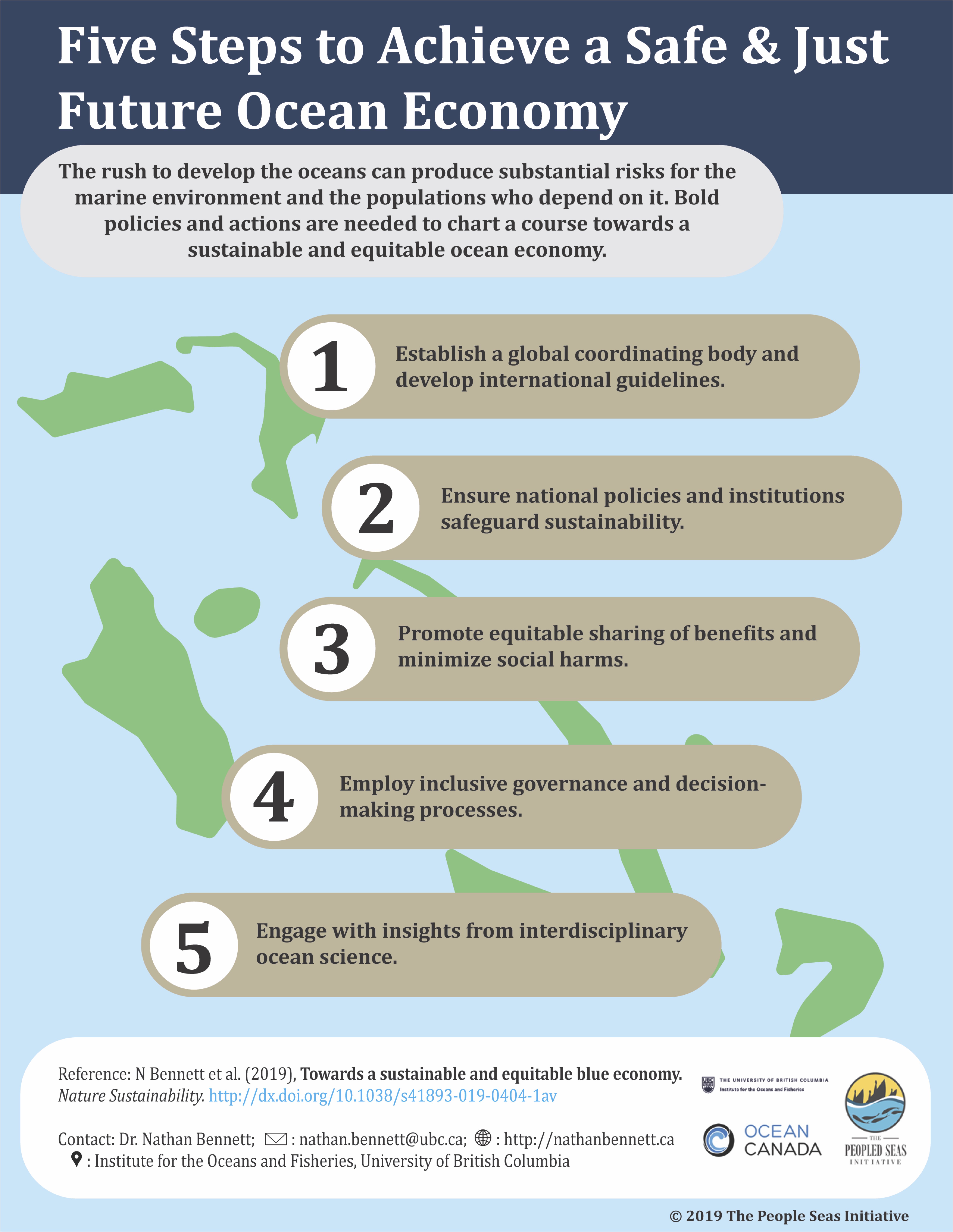
Our five recommendations, which are summarized in our press release, include:
- Establishing a global coordinating body and develop international guidelines;
- Ensuring national policies and institutions safeguard sustainability;
- Promoting equitable sharing of benefits and minimization of harms;
- Employing inclusive governance and decision-making processes; and
- Engaging with insights from interdisciplinary ocean science.
Read the paper here: rdcu.be/bUfM8
Accompanying press release: Achieving a safe and just future for the ocean economy
New Paper: Just Transformations to Sustainability

A group of co-authors and I have published a new open access paper titled Just Transformations to Sustainability (Link to PDF). In this paper, we argue that sustainability transformations cannot be considered a success unless social justice is a central concern. Here, we define just transformations as “radical shifts in social–ecological system configurations through forced, emergent or deliberate processes that produce balanced and beneficial outcomes for both social justice and environmental sustainability.” We also provide a framework that highlights how recognitional, procedural and distributional justice can be taken into account to navigate just transformations in environmental sustainability policies and practice.
Reference: Bennett, N. J., Blythe, J., Cisneros-Montemayor, A. M., Singh, G. G., & Sumaila, U. R. (2019). Just Transformations to Sustainability. Sustainability, 11(14), 3881. https://doi.org/10.3390/su11143881
Maintaining coastal and Indigenous community access to marine resources and the ocean in Canada
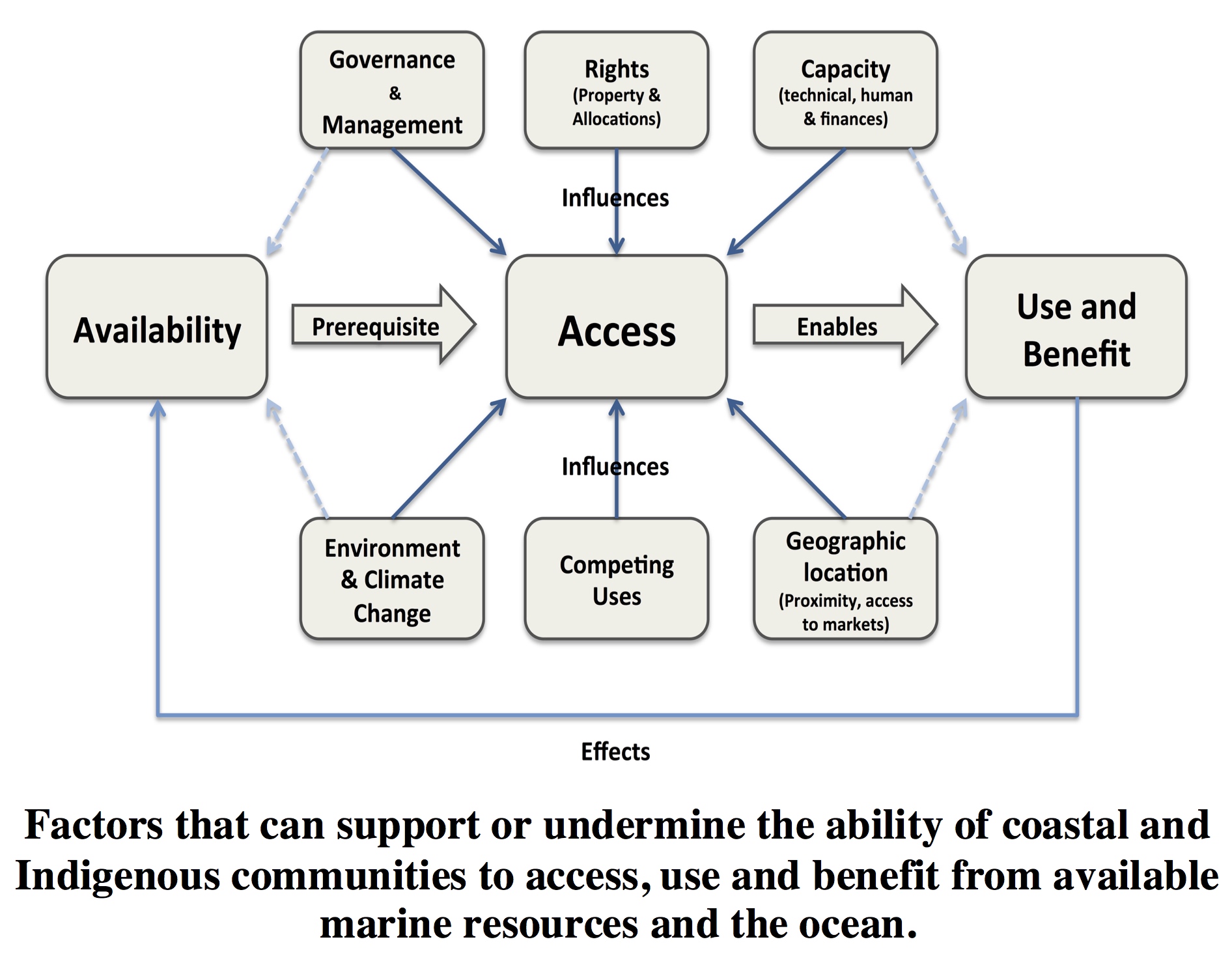
 A group representing academics, Indigenous peoples, fishers, and NGOs recently published a review and policy perspective paper in Marine Policy urging that access for coastal and Indigenous communities should be a priority consideration in all policies and decision-making processes related to fisheries and the ocean in Canada. The ability to use and benefit from marine resources (including fisheries) and areas of the ocean or coast is central to the sustainability of coastal communities. In Canada, however, access to marine resources and spaces is a significant and growing issue for many coastal and Indigenous communities due to an increasingly busy ocean: ocean-related development, competition over fisheries and marine resources, and marine planning and conservation activities that confine activities to certain areas. Loss of access has implications for the well-being, including economic, social, cultural, health, and political considerations, and persistence of coastal and Indigenous communities across the Pacific, Atlantic and Arctic coasts of Canada. The vibrancy and continuity of these communities is important to Canadian society for many reasons, including identity, autonomy, sovereignty, culture, healthy rural-urban dynamics, and environmental sustainability. Greater attention is needed to the various factors that support or undermine the ability of coastal and Indigenous communities to access and benefit from the ocean and how to reverse the current trend to ensure that coastal and Indigenous communities thrive in the future.
|
KEY MESSAGES Access to marine resources and the ocean is important for the well-being of coastal populations. In Canada, the ability of many coastal and Indigenous communities to access and benefit from the ocean is a growing issue. Access for coastal and Indigenous communities should be a priority consideration in all policies and decision-making processes related to fisheries and the ocean in Canada. Taking action now could reverse the current trend and ensure that coastal and Indigenous communities thrive in the future. |
Recommended actions include:
- Ensuring access is proactively and transparently considered in all fisheries and ocean-related decisions.
- Supporting policy-relevant research on access issues to fill knowledge gaps and enable effective policy and management responses.
- Making data publicly available and accessible and including communities in decision-making processes that grant or restrict access to adjacent marine resources and spaces.
- Ensuring updated laws, policies and planning processes explicitly incorporate access considerations.
- Identifying and taking priority actions now to maintain and increase access, when appropriate and sustainable, for coastal and Indigenous communities.
|
**For more information, refer to the following publication and policy brief: Bennett NJ et al. 2018. Coastal and Indigenous community access to marine resources and the ocean: A policy imperative for Canada. Marine Policy 87:186–193. Link: https://www.sciencedirect.com/science/article/pii/S0308597X17306413 Policy Brief: Maintaining coastal and Indigenous community access to marine resources and the ocean in Canada |
This work was supported by the OceanCanada Partnership through a grant from the Social Science and Humanities Research Council (SSHRC) of Canada. For more information, please email myself (nathan.bennett@ubc.ca) or Megan Bailey (megan.bailey@dal.ca).
 Nathan J. Bennett